

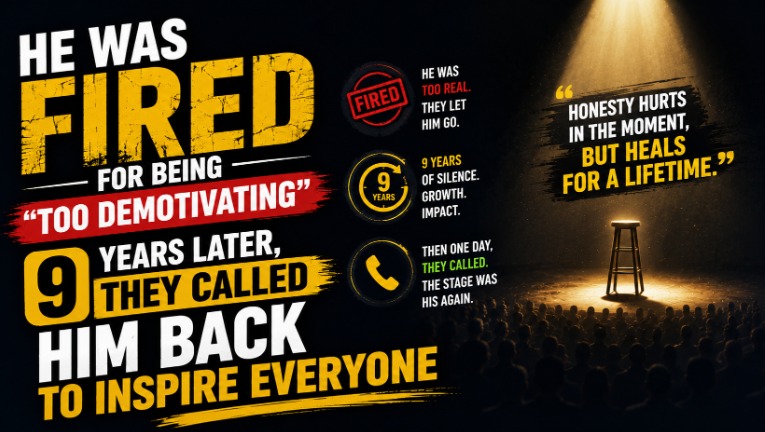
Most career pivots happen quietly, a resignation letter, a new job title, nothing anyone outside the family notices. Akash Gautam’s pivot happened in reverse and in public: he was let go from a job in the garment industry, in part, for demotivating his own colleagues. Years later, in 2014, that exact organization invited him back, this time to inspire the entire team.
A Fashion Degree That Led Nowhere Comfortable
Akash Gautam completed his postgraduate studies in Fashion at NIFT, New Delhi, between 1998 and 2001, a credential that should have set up a fairly conventional career path in the garment industry. It didn’t work out that way. By his own account, he wasn’t particularly good at fashion, and it didn’t make him happy either. That mismatch showed up at work. He was sacked from his second job in the industry, and the demotivation wasn’t limited to himself. He was affecting the people around him too.
For most people, getting fired for negatively affecting team morale would be a low point worth burying. For Akash, it became the hinge the entire rest of his career turned on.
The Twist Nobody Could Have Scripted
In 2014, that same organization, the one that had let him go years earlier, reached out again. This time, it wasn’t for a job in fashion. It was to book him to inspire their entire team. Akash has described this as the “Rambo moment” of his career, the unlikely, almost cinematic return of someone written off once now being asked to lead the exact kind of session he’d once struggled to deliver in a completely different role.
The lesson he draws from it is straightforward: if what you’re doing isn’t your actual passion, there’s genuinely nothing to lose by walking away from it. It’s an easy thing to say in hindsight. It was considerably harder to believe in his early twenties, when almost no one, including people close to him, took his pivot toward speaking seriously.
Building Credibility From Zero
The years immediately following that firing weren’t glamorous. Akash has spoken candidly about how little external validation existed in the beginning: skepticism from potential clients, and even from people in his personal life who encouraged him to abandon what looked like an impractical dream in favor of something more conventional, like preparing for banking exams.
What eventually took hold was a simple, repeatable idea: qualifications don’t always matter as much as confidence and demonstrated skill, and building a durable career means treating yourself like a product worth sharpening and consistently offering to the market, for years, before it pays off. That’s a less glamorous version of the “follow your passion” narrative often associated with career pivots, closer to persistent, unglamorous repetition than to a single lucky break.
What the Story Actually Illustrates
Akash Gautam‘s early career arc is a useful data point in a broader pattern worth noting: the corporate speakers and trainers who build the longest careers rarely do so on the strength of a single dramatic success. They tend to have absorbed real rejection first, sometimes in ways that would have quietly ended the ambition for most people, and kept building anyway.
What makes Akash’s specific story notable isn’t just the reversal itself, being fired then rehired by the same organization for the opposite reason. It’s that he tells it as a specific, dated account rather than a smoothed-over inspirational anecdote. The uncomfortable detail, that he was let go partly for demotivating colleagues, is one most people in his position might have left out entirely.
Why This Kind of Story Resonates With Corporate Audiences
Event planners booking motivational speakers in India for corporate audiences increasingly favor speakers whose material comes from lived, specific experience over borrowed theory. A speaker who can point to a real, specific moment, a firing, a comeback, a named organization, tends to land with more credibility than one relying purely on generic self-help framing.
That preference reflects something audiences have gotten sharper about detecting over the past decade: the difference between a story told with specific, unflattering detail and one smoothed over for effect. Akash’s account of the garment industry firing and the 2014 return isn’t polished into something universally flattering. It includes the uncomfortable part, being let go for bringing others down, which is precisely what makes the rest of the story credible.
The Broader Takeaway
Career reversals like this one rarely make for tidy case studies, and that’s part of what makes them worth paying attention to. A motivational speaker whose own history includes a real professional failure, acknowledged rather than edited out, is often better equipped to speak honestly to corporate audiences navigating their own setbacks. Akash’s path from a fashion degree to a garment industry firing to a full-circle invitation back into that same company suggests that the most convincing credibility in this field isn’t built on an unbroken record of success. It’s built on being honest about the parts that weren’t.