

Gomez’s UX research says 88% of online users are less likely to return after a poor digital experience, proving that branding today is shaped as much by usability as visuals.
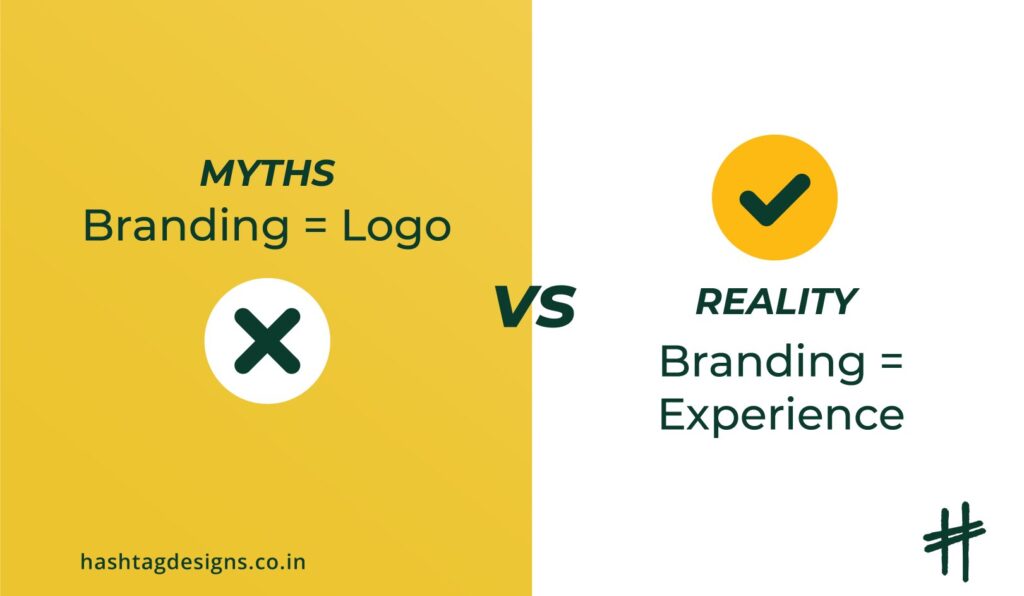
The definition of branding is undergoing a quiet but significant transformation. For years, branding has been closely associated with visual identity logos, colour systems, typography, and guidelines that shape how a business appears. While these elements remain important, they are no longer sufficient to define how a brand is perceived in today’s digital-first environment. Hashtag Designs is among the studios advocating for a broader understanding of branding, one that extends beyond visuals into experience, clarity, and interaction.
This shift is largely driven by changes in user behaviour. Modern consumers no longer engage with brands in isolated moments. Instead, they interact through continuous digital journeys browsing websites, using applications, navigating dashboards, and engaging with content across platforms. Each of these interactions contributes to perception, often more strongly than static visual elements.
Hashtag Designs approaches branding as a multi-layered system that operates across these interactions. The studio emphasizes that branding is not confined to how something looks, but how it works and how it is understood. This perspective reflects a growing recognition within the industry that experience is now central to brand identity.
Madhushree Kulkarni, founder of Hashtag Designs, highlights that many businesses continue to rely on outdated definitions of branding. “There’s still a strong tendency to treat branding as a visual milestone something you complete once and move on from. But in reality, branding is continuous. Every interaction a user has with your product or platform is shaping how they perceive you,” she explains.
One of the key challenges businesses face is the gap between visibility and clarity. With the rise of digital marketing, brands are more visible than ever. However, visibility does not always translate into understanding. Users may encounter a brand multiple times but still struggle to grasp what it offers or how it works.
According to Madhushree, this gap is often the result of fragmented systems. “You might have strong visual design, good marketing, and a functional product but if these elements are not aligned, the brand feels disconnected. And when something feels disconnected, users hesitate. That hesitation directly impacts trust,” she says.
To address this, Hashtag Designs focuses on aligning design, communication, and user experience into a cohesive system. This involves identifying inconsistencies across touchpoints and resolving them through structured frameworks. The goal is to create a unified experience where users can easily understand and navigate the brand.
Another important aspect of this approach is usability. In a digital environment where users have limited time and attention, ease of use becomes a critical factor in perception. Brands that are intuitive and straightforward are more likely to retain users, while those that create friction risk losing engagement.
Hashtag Designs integrates usability into its branding process by simplifying interactions and reducing cognitive load. This ensures that users can move through a product or platform without confusion, reinforcing a sense of reliability.
The emphasis on clarity also extends to communication. Messaging that is inconsistent or overly complex can dilute the brand’s identity, even if the visual design is strong. By aligning communication with design and experience, the studio ensures that every aspect of the brand conveys the same intent.
This shift toward experience-led branding is becoming increasingly relevant as businesses compete in crowded digital markets. Differentiation is no longer achieved solely through visual appeal, but through the ability to deliver clear, consistent, and meaningful interactions.
Hashtag Designs’ perspective reflects this broader industry evolution. By redefining branding as a system rather than a static asset, the studio is helping businesses adapt to changing expectations and build stronger connections with their users.
As the role of digital experiences continues to expand, the definition of branding is likely to evolve further. In this context, the approach advocated by Hashtag Designs highlights a fundamental truth: branding is no longer just about what users see it is about what they experience, understand, and remember over time.
In today’s digital-first world, brands are judged not only by how they look, but by how clearly they communicate and how seamlessly they perform across every touchpoint. Businesses that embrace this shift build stronger trust, deeper engagement, and lasting loyalty.
If your company is ready to move beyond superficial branding and create a robust system built for growth, visit Hashtag Designs and discover how strategic branding can transform your market presence.