

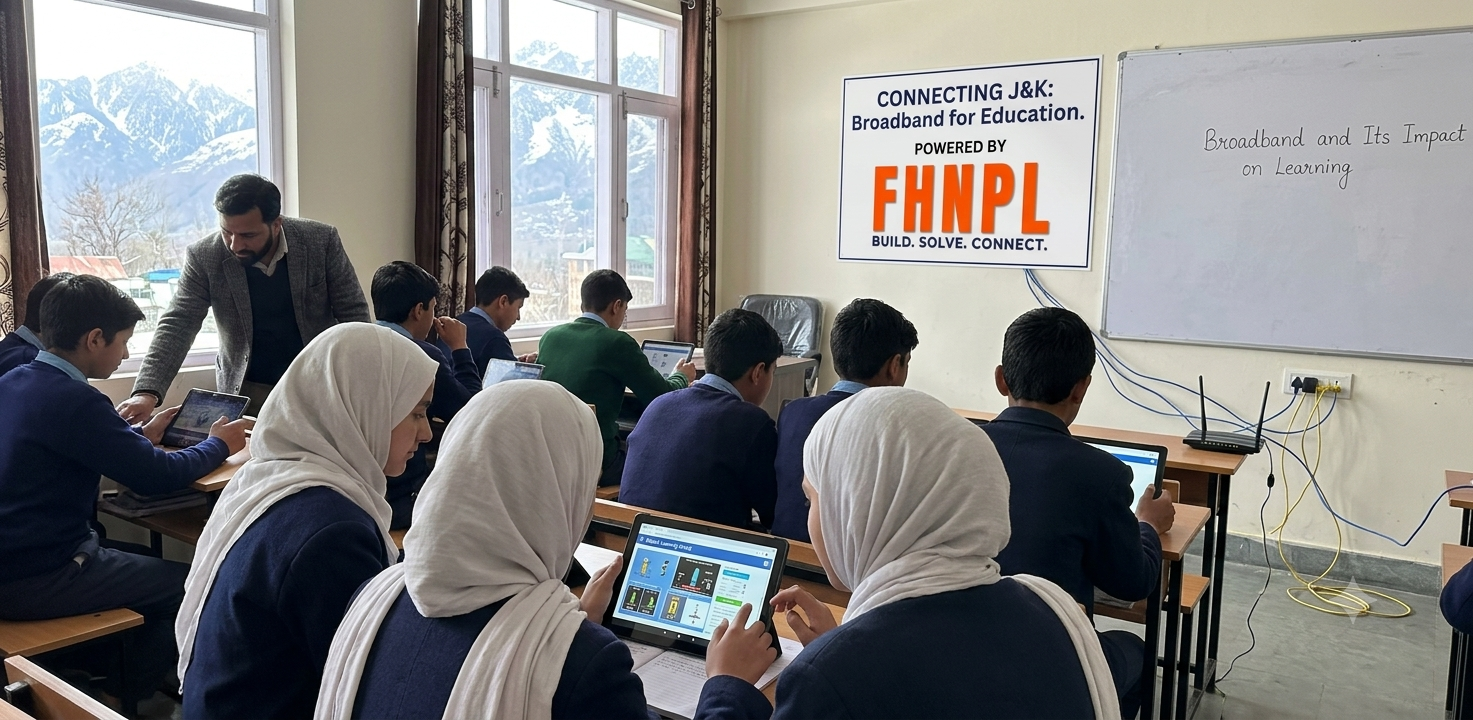
A teacher in a government school in Shopian trying to run an online class through a connection that drops every few minutes understands something policymakers sometimes miss: digital education isn’t just about devices and curriculum — it lives or dies on the broadband connection underneath it.
Why School Connectivity Is a Different Problem Than Home Broadband
A school isn’t a single user browsing casually — it’s potentially dozens of devices, smart boards, administrative systems and, increasingly, online assessment platforms all depending on the same connection simultaneously. Broadband sized for a household simply isn’t adequate for an institution running digital classrooms across multiple rooms at once.
What Reliable School Connectivity Actually Requires
Adequate, Consistent Bandwidth
Schools running video-based learning, digital whiteboards or online examinations need bandwidth that holds up consistently throughout the school day, not just during off-peak testing. A Broadband Services in Jammu & Kashmir plan designed for institutional use, rather than a residential-grade connection stretched across an entire school, makes a measurable difference in classroom experience.
Reliable Wi-Fi Across Multiple Classrooms
Beyond the internet connection itself, schools need properly planned internal Wi-Fi covering multiple classrooms and floors — a challenge similar to enterprise Wi-Fi deployment, requiring a proper site survey rather than a single router expected to cover an entire building.
Cybersecurity Awareness Starts in Schools
Digital connectivity in schools brings a parallel responsibility: teaching students safe online practices from an early age. Programmes bringing cyber safety and safe password practices directly into government schools — as seen in initiatives across districts like Kulgam involving both educators and network security professionals — recognise that digital literacy and safety need to be taught alongside connectivity itself, not left for students to learn on their own later.
Rural Schools Face a Steeper Connectivity Climb
Schools in remote villages face compounded challenges — not only limited local infrastructure but also the broader rural connectivity gap affecting their entire community. Extending Wireless Internet Provider coverage to rural schools often has a multiplying effect, since a connected school frequently becomes a shared community access point for the surrounding village as well.
The Long-Term Payoff of Investing in School Connectivity
Students who grow up with reliable digital access to educational tools, online resources and safe internet practices carry those advantages into higher education and employment, making school connectivity investment one of the more consequential, if less visible, long-term investments a region can make in its own economic future.
What Schools Should Ask Before Choosing a Provider
Schools evaluating connectivity options should ask about institutional pricing, dedicated support response times, and whether the provider has experience serving educational institutions specifically. A Fasthook Networks Pvt Ltd representative conducting a school site assessment, for example, would typically evaluate classroom count, expected simultaneous device usage, and existing Wi-Fi infrastructure before recommending a plan, rather than offering a generic package.
Conclusion
Education technology can only deliver on its promise if the broadband underneath it is reliable enough to trust. As more schools across Jammu & Kashmir gain access to institution-grade connectivity, the digital learning gap between urban and rural students has a genuine chance of narrowing — provided broadband investment keeps pace with the curriculum’s growing digital demands.
Frequently Asked Questions
Q: Why do schools need different broadband than homes?
A: Schools support many simultaneous users and devices across multiple rooms, requiring more bandwidth and better internal Wi-Fi planning than a typical home connection.
Q: How does poor school connectivity affect students?
A: It can disrupt digital classrooms, online assessments and access to educational resources, disproportionately affecting students in already underserved areas.
Q: Are cybersecurity awareness programmes common in J&K schools?
A: Yes, several regional initiatives now bring cyber safety and safe password practices directly into government schools alongside standard curriculum.
Q: Can a connected rural school benefit the wider village?
A: Often yes, as a school with reliable connectivity can become a shared access point benefiting the broader community around it.
Q: What should schools look for in a broadband provider?
A: Institution-grade bandwidth sized to actual usage, reliable internal Wi-Fi planning, and a provider with genuine local infrastructure and support.
Call to Action
Looking to upgrade connectivity for a school or educational institution in J&K? Request a free assessment for institution-grade broadband. Visit fhnpl.com or follow updates on Facebook, X (Twitter) and Instagram.
Learn more: fhnpl.com | Facebook | X (Twitter) | Instagram